

In Stock and Custom Order Handpans for sale
What Is a Handpan? Quick Definition
A handpan is a hand-played, UFO-shaped percussion instrument made from two convex steel half-shells glued together, with a central note (the “Ding”) and a circle of surrounding tone fields tuned to a musical scale. Unlike a steel drum, which is played with mallets, a handpan is played entirely with the hands and fingers. The terms hang, handpan, and pantam all describe closely related instruments — the differences come down to history, branding, and builder preference, which we explain below.
Is it a Hang Drum or a Handpan?
Players commonly use the terms hang drum, handpan, or pantam to describe the Saraz and similar instruments. Many builders of these unique instruments use multiple terms to describe their work, whether they create instruments with tuned membranes or cut tongues.
At Saraz we choose to call our instruments handpans instead of hang drums or pantams. Our reasoning can be explained by sharing a short history of handpan terminology.
The Origin Story — From Steelpan to Hang
The story of the handpan begins not in Switzerland, but in Trinidad and Tobago, where the steelpan (or steel drum) was developed in the mid-20th century from oil drums. Steelpans are played with mallets and produce melodic tones from hammered, tuned sections of a steel barrel.
In the late 1990s, Swiss instrument makers Felix Rohner and Sabina Schärer of PANArt were exploring new directions for steel as a musical material. Drawing inspiration from steelpan construction, Tibetan singing bowls, and gamelan gongs, they developed a closed, two-shell steel instrument tuned with a central note surrounded by a ring of additional notes — and played with bare hands rather than mallets.
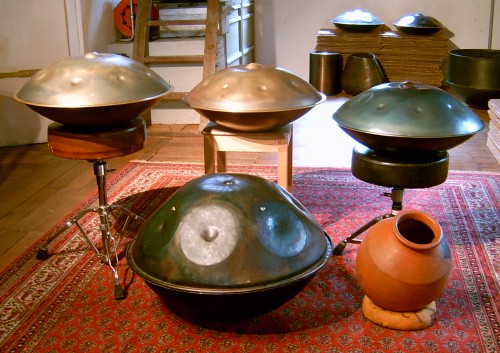
The PANart Hang
Around 2000 in Bern, Switzerland, a new type of musical instrument emerged when PANArt HangBau AG developed the Hang®. Hang — a word from the Bernese German dialect meaning “hand.” The first Hangs were released publicly around 2001, and the instrument quickly developed a devoted following among street musicians and percussionists drawn to its meditative, bell-like resonance.
The Hang is sometimes referred to as a hang drum, but the inventors, Felix Rohner and Sabina Schärer, have considered that variation a misnomer for over a decade and they strongly discourage its use. One reason PANArt discourages the use of the term hang drum is because it subconsciously leads people to believe that the instrument is a drum, like a djembe or a conga, and therefore can be played very hard with hands or mallets. In reality, the tuning of these instruments is not developed to be sturdy enough to maintain its tuning when hit aggressively or with mallets.
PANArt has also stated that they consider themselves to be the only true manufacturer of the Hang®. The term hang drum is basically a proprietary eponym. Other builders who have been inspired by the Hang® to develop their own instruments have been encouraged to use a different name.

The Hand Pan
Early on, the Hang could be bought through distributors around the world. However, once the Hang gained in popularity, it became increasingly difficult to purchase. Buyers were required to travel to Bern Switzerland to purchase the PANart Hang directly from the builders. With limited supply, other people began exploring this new chapter of tuned steel and creating their own singing steel instruments.
One of the next builders to emerge after PANArt was Pantheon Steel. Pantheon Steel’s tuner, Kyle Cox, coined the name handpan around 2007 to describe a type of steel pan that is played with the hands. This new term emerged as the moderators of HangBlog.org explained PANArt’s wishes to be the sole user of the term Hang.
Soon after, Handpan.org was created to discuss and explore the new builders who were inspired by the Hang®. While Hangblog.org has become primarily an information source about the Hang® in recent years, Handpan.org remains a forum with a community of thousands of members who explore endless details about established handpan builders, playing, making, and maintaining handpans. The site also shares information about handpan festivals and gatherings around the world.
It is worth mentioning that the term handpan has not been officially solidified either. Is it a handpan or a hand pan? While most people use the term as one word, not everyone does. The topic has come up in discussion between builders more than once. Ultimately, in the evolution of this young art form, it is up to each builder and player to use these terms as they wish.
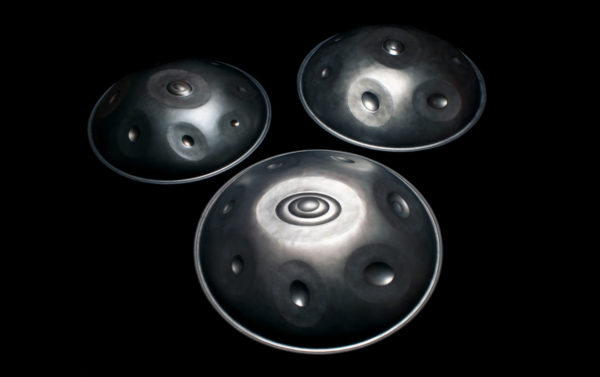
The Pantam
The term pantam increased in popularity after Victor Levinson used it to describe his own SPB instruments. The term pantam was actually used early on by a distributor in Israel to describe the Hang®. The term is slowly gaining steam and is now commonly used by a couple of other builders including Yishama and Ayasa. A number of Saraz customers commonly refer to our instruments as pantams as well.
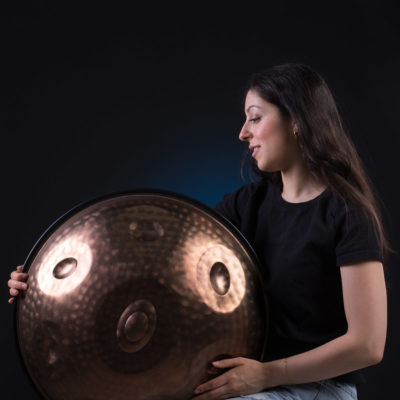
How to Spot a Fake or Misrepresented Handpan
Because “handpan” has become a popular and lucrative search term, it’s increasingly common to see low-quality instruments marketed as handpans online — particularly from mass-produced, drop-shipped sources. Here’s what to look for:
- Construction quality: Genuine handpans are hand tuned individually, which takes builders days to weeks per instrument.
- Sustain and overtones: A well-built handpan rings with rich, layered overtones and sustain on each note. Cheap imitations tend to sound dull, “tinny,” or short.
- Glue seam and shell quality: Look for a clean, even glue seam around the equator of the instrument and consistent shell thickness.
- Pricing: A professionally hand-tuned handpan typically starts in the $2000–$5,000+ range. Instruments priced under a few hundred dollars are almost never true hand-tuned handpans, regardless of how they’re marketed.
- Builder transparency: Reputable builders (Saraz included) will show their build process, tunign standards, and often offer video/audio samples of the specific instrument you’re buying — not stock photos or generic demo videos.
If you’re shopping for your first instrument, our Buying Guide and Price Guide go into more depth on what separates a quality build from an imitation.
Is a hang drum the same as a handpan?
Functionally, they’re the same family of instrument. “Hang” technically refers only to PANArt’s specific instruments, while “handpan” is the term most other builders, including Saraz, use for the broader category.
Why don’t people call it a “hang drum” anymore?
PANArt discourages the term because “drum” suggests the instrument can handle mallet strikes or aggressive percussion, which isn’t true of its tuning. Most of the community has shifted to “handpan” instead.
What’s the difference between a handpan and a steel drum/steelpan?
A steelpan is played with mallets and made from a single shell. A handpan is a sealed, two-shell instrument played entirely by hand, with a distinct central “Ding” note and a different tonal character.
Final Thoughts
Perhaps in 100 years, a singular term will dominate how we discuss our favorite instrument. At Saraz, we refer to our instruments as handpans in reverence to the roots of tuned steel in Trinidad and in respect to the inspiration that first sprouted in Switzerland.
It’s really all semantics. At least one player refers to his SPB and Aciel instruments as cupolas. Whichever name resonates most deeply with our players is fine with us.
Shop Now
Explore our collection or immediately available instruments and accessories in our Online Shop. You can also custom order a Saraz Handpan with the scale of your choice from the largest available Offered Scale List on earth. Not sure what a handpan should cost? Read our honest price guide. If you have any questions, don’t hesitate to Contact Us. We look forward to hearing from you and welcoming you to our global family of players.